
Doors
Sliding doors
A sliding door moves along a track instead of swinging, which saves floor space and lets large openings stay open without a leaf in the way. We make bespoke wooden sliding doors for Dubai homes with concealed or visible tracks, pocket doors that slide into the wall and folding doors for wide openings.


Timber sliding doors, made to the opening
Our sliding doors are interior timber, veneer and lacquer doors, drawn to the opening and fitted with track hardware rated for the leaf. They suit kitchens, studies, dressing rooms, en suites and any wide opening where a hinged door would get in the way. For aluminium and glass patio systems, speak to Fix It Mates.
Our work
Examples
Real doors we have made, photographed on site.


Sliding doors for Dubai homes
Sliding doors save the space a hinged door needs to swing and let one room open into another without a leaf in the way. In Dubai apartments they divide living rooms from kitchens, bedrooms from dressing rooms and study corners from open plan spaces. In villas they close off a majlis or a formal dining room with a wide pair, or disappear into the wall as pocket doors. We make timber sliding doors to order, with the track, the carriers, the soft close and the handles chosen for the door's weight and the way the room is used.
Types of sliding door
A concealed track sliding door hangs from a rail hidden in the ceiling or behind a pelmet, so only the leaf is seen. A visible track door runs on an exposed rail, which can be a slim black bar for a modern room or a heavier barn style rail. A pocket door slides into a cavity in the wall and vanishes completely, which needs the wall built or opened to take the pocket. A folding door, also called a bifold, stacks two or more leaves to one side to open a wide span. Each of these has its own page with sizes, hardware and examples.
Sliding door design
Because a sliding door is seen as a whole panel, the face matters. Flush veneer in walnut or oak, fluted timber, lacquer in a colour from the room, or a frame with reeded or clear glass are the usual choices. A sliding door to a kitchen often takes glass so the room still reads as one space when closed. A sliding door to a bedroom takes a solid leaf with a soft close and a privacy lock. For partitions between living and dining areas, a pair of wide sliding leaves in fluted timber or glass gives a room divider that is a feature rather than a compromise.
Mechanism, track and soft close
The hardware is what makes a sliding door feel expensive or cheap. We use top hung systems with ball bearing carriers rated for the leaf weight, with a floor guide rather than a floor track so there is nothing to step over or clean. Soft close dampers on both ends mean the door glides to a stop instead of banging. Synchronised systems move two leaves together with one push. For heavy or very wide leaves we use lift and slide or commercial grade rails. Every track is specified on the drawing with the leaf weight, so the door you receive runs as it should for years.
Sliding door locks and handles
Sliding doors take flush pull handles recessed into the leaf, edge pulls for pocket doors, or a long pull bar on a visible track door. Locks are hook bolt sliding door locks with a thumb turn for bathrooms and bedrooms, or a key lock where a room needs to be secured. We machine the leaf for the pulls and the lock in production.
Sliding doors in Dubai apartments
Apartment walls are often block or drywall with services inside, so a pocket door needs a check on what is in the wall before the cavity is cut; a concealed track door avoids that. Ceiling heights, bulkheads and air conditioning grilles decide where a track can run, which is why every sliding door starts with a site measure rather than a catalogue size.
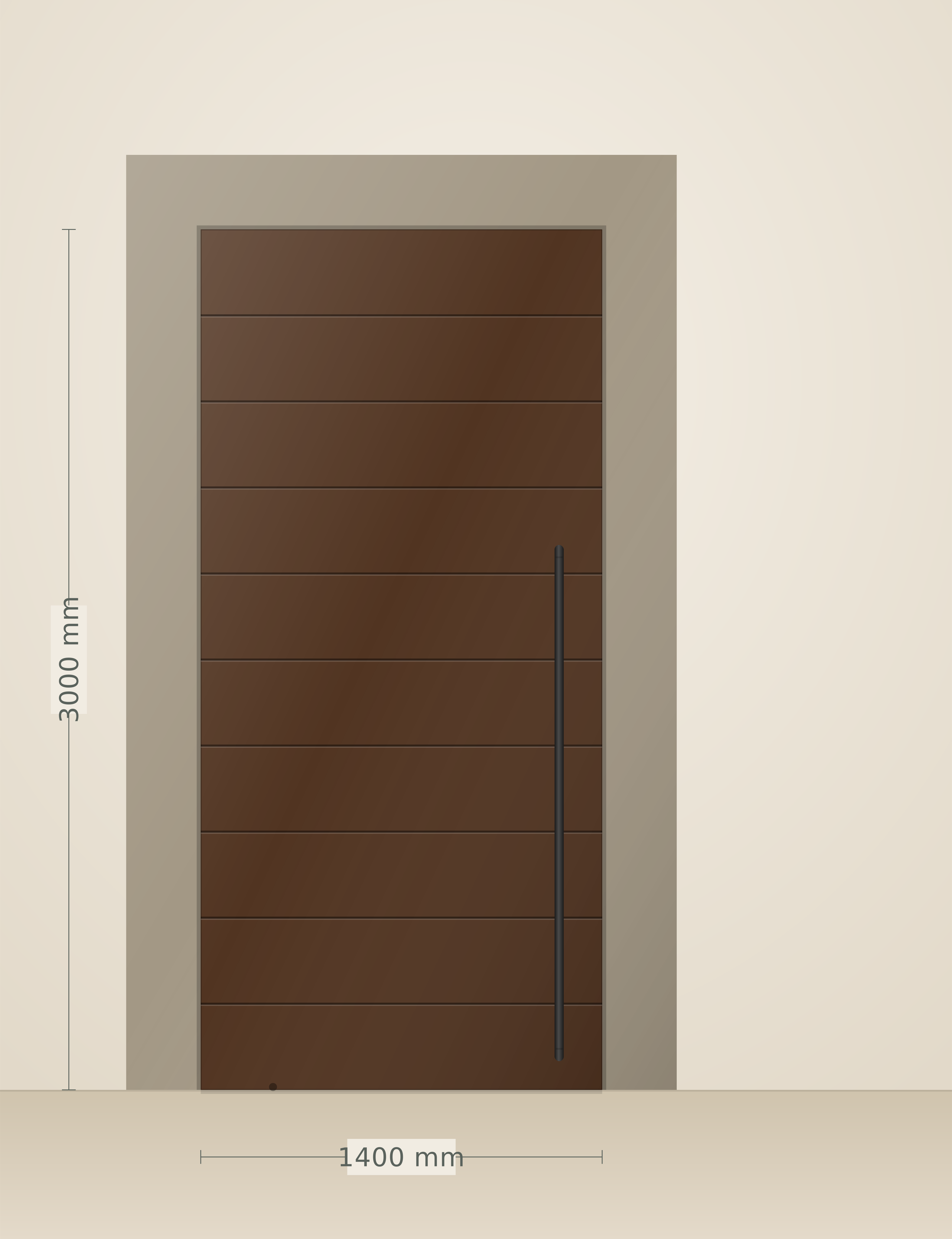
Door designer
Design your door online
Choose the type, size, design, finish, hardware and frame and watch your door drawn live. Send it to us on WhatsApp or by email and we will take it from there.
- Pivot, double, hidden, sliding and more
- Walnut, oak, teak and lacquer finishes
- Pull bars, levers and smart locks
- Sizes in millimetres, ready for a site measure
How we work
From site measure to installation
Four steps, one point of contact, and nothing made until you approve the drawings.
Site measure
We visit, measure the opening, check the wall build up and floor level, and talk through how the door should look and work.
Drawings and samples
You receive shop drawings and physical finish samples. Nothing goes into production until you or your designer approve them.
Made to order
Your door is factory produced to the approved drawings, with production updates as it moves through the build and a quality check before it leaves.
Installed by our team
Our fitting team installs, adjusts and hands over the door, with one point of contact from the first visit to the last adjustment.
Questions
Frequently asked
Which is better, a pocket door or a sliding door?
A pocket door disappears into the wall, so it needs a wall cavity built for it. A surface sliding door runs along the face of the wall and is simpler to add to an existing room, but needs clear wall beside the opening.
Can sliding doors be soft closing?
Yes. We specify soft close and soft open dampers on the track so the leaf slows before it reaches the end.
Do you make glass sliding doors?
Our sliding doors are timber, veneer and lacquer, and can include glass panels. For full aluminium and glass systems, Fix It Mates can help.
How long does a bespoke door take?
Lead time depends on the size, finish, hardware and how quickly drawings are approved. We confirm the programme in writing when you approve the drawings, and keep you updated during production.
How much space does a sliding door need?
A sliding leaf needs wall space beside the opening equal to its width to slide across, or a pocket inside the wall. A pair of leaves needs half that on each side. Folding doors need almost none, as the leaves stack at the edge of the opening.
Can a sliding door be soundproof?
A sliding door cannot seal like a hinged door, but a solid leaf with brush seals, a soft close and a pocket or overlap detail cuts most sound. For a bedroom or study we specify the leaf and the seals for privacy.
What is the difference between a pocket door and a sliding door?
A pocket door slides into a cavity in the wall and disappears; a standard sliding door runs along the face of the wall. A pocket needs the wall built or opened for it, so it is best planned during a renovation or a new build.
Can a sliding door lock?
Yes. Hook bolt locks with a thumb turn or a key are made for sliding doors, and we fit them to bathroom, bedroom and office sliding doors.
Do sliding doors need a track on the floor?
No. Our doors are top hung with a small floor guide, so there is no floor track to trip over or clean.
Start your project
Tell us about your doors
Send photos and rough sizes on WhatsApp for a first conversation, or book a site measure and we will take it from there.