
Sliding doors
Pocket doors
A pocket door slides into a cavity inside the wall, so when it is open the door disappears completely and the wall face stays clear. We make bespoke sliding pocket doors for Dubai homes in timber, veneer and lacquer, fitted with pocket frame systems and soft close hardware.

What a pocket door needs
The wall beside the opening has to hold a pocket frame at least as wide as the door. In new builds and renovations this is planned into the drywall. In existing block walls it usually means building out a new stud wall, which we assess on site.
Our work
Examples
Real doors we have made, photographed on site.
How a pocket door works
A pocket door slides into a cavity inside the wall beside the opening, so when it is open there is no door to be seen at all and both faces of the wall stay clear. The cavity is formed by a pocket frame: a steel or aluminium cage with a track at its head, which is built into the wall during construction and then plastered or boarded over on both sides. The leaf hangs from carriages in the track and is guided at the foot by a short channel at the mouth of the pocket. When closed, the leaf sits inside the opening in a jamb and stop like a hinged door, which gives far better privacy than a surface sliding door.
Building the pocket
The pocket frame is as wide as the leaf plus a small margin and as tall as the opening, so the wall beside the door must be at least the width of the door and must not carry services where the pocket goes. In new builds and renovations the pocket frame is set in the drywall as part of the partition. In an existing block wall the usual answer is a new stud wall built in front of the block to house the pocket, which adds around 100 to 125 mm to the wall thickness on that side. We assess this at the site measure, because it decides whether a pocket door is practical in a finished house.
Single, double and glazed pockets
A single pocket takes one leaf into one side of the opening. A double pocket takes two leaves into both sides, meeting in the middle, which suits a wide opening between living and dining or a dressing room off a bedroom. Glazed leaves, in a timber frame with clear or reeded glass, let light through a closed door and are common between a kitchen and a living room.
Hardware
Because the leaf disappears into the wall, the pull must be flush with the face: a recessed flush pull on both sides, and an edge pull on the leading edge so the leaf can be drawn out of the pocket. A pocket door lock with a hook bolt and a thumb turn gives privacy to a bathroom or bedroom. Soft close dampers are fitted in the track on every pocket door we supply.
Finishes
Pocket door leaves are made in the same finishes as our interior doors, veneer press, PU paint or laminate, and the jambs and architraves at the mouth of the pocket match the other doors in the house so the opening reads as one of a set.
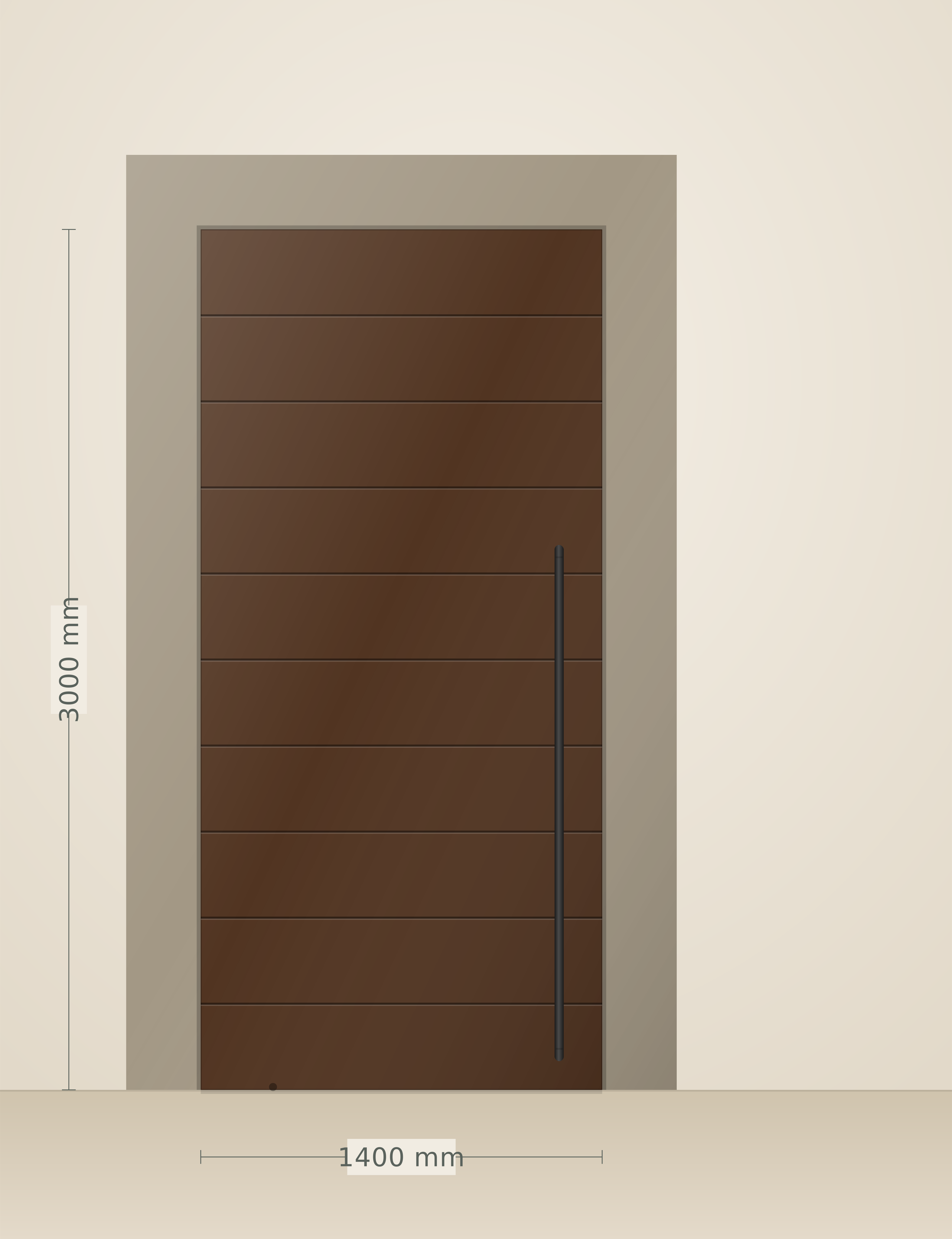
Door designer
Design your door online
Choose the type, size, design, finish, hardware and frame and watch your door drawn live. Send it to us on WhatsApp or by email and we will take it from there.
- Pivot, double, hidden, sliding and more
- Walnut, oak, teak and lacquer finishes
- Pull bars, levers and smart locks
- Sizes in millimetres, ready for a site measure
How we work
From site measure to installation
Four steps, one point of contact, and nothing made until you approve the drawings.
Site measure
We visit, measure the opening, check the wall build up and floor level, and talk through how the door should look and work.
Drawings and samples
You receive shop drawings and physical finish samples. Nothing goes into production until you or your designer approve them.
Made to order
Your door is factory produced to the approved drawings, with production updates as it moves through the build and a quality check before it leaves.
Installed by our team
Our fitting team installs, adjusts and hands over the door, with one point of contact from the first visit to the last adjustment.
Questions
Frequently asked
Can a pocket door be installed in an existing wall?
In drywall partitions it is often straightforward. In block walls a new pocket wall is usually built beside the opening. We check this at the site measure.
How long does a bespoke door take?
Lead time depends on the size, finish, hardware and how quickly drawings are approved. We confirm the programme in writing when you approve the drawings, and keep you updated during production.
How thick does a wall need to be for a pocket door?
The finished wall is usually 100 to 125 mm thick on the pocket side, enough for the pocket frame and the leaf with a board or plaster finish each side. In an existing block wall a new stud wall is built in front to house the pocket.
Can a pocket door be locked?
Yes. A pocket door lock with a hook bolt and a thumb turn is fitted into the leading edge, and the flush pulls are made to suit it.
Start your project
Tell us about your doors
Send photos and rough sizes on WhatsApp for a first conversation, or book a site measure and we will take it from there.